Clean Carriers, Healthy Babies: Hygiene & Carrier Care for Germ Season (Part 3)
Dec 12, 2025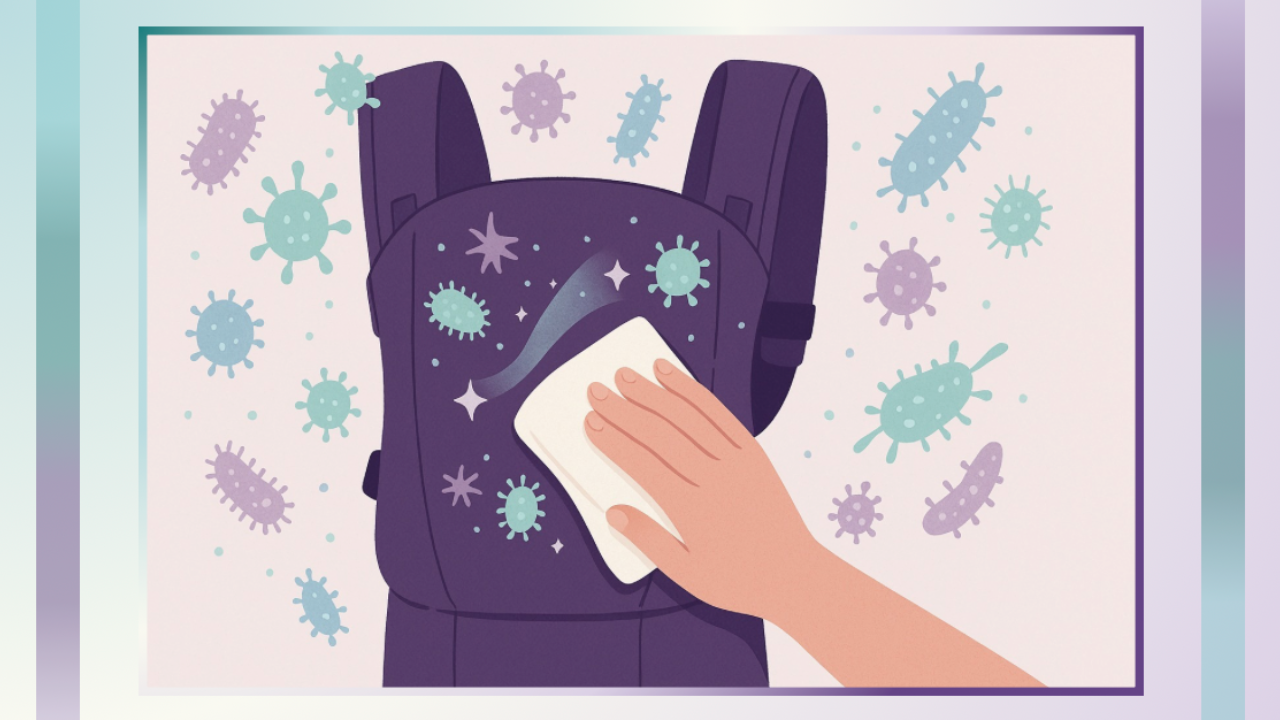
Welcome to Part 3 of our winter germ-season series. In Part 1, we explored why infants are more vulnerable to illness during fall and winter. In Part 2, we looked at how babywearing itself reduces exposure and supports immunity.
Today, we’re turning to an often overlooked piece of the puzzle when navigating germ season with an infant: carrier hygiene.
With all its benefits, babywearing does come with one consideration: the carrier itself becomes an extension of you and baby, and it can get dirty or harbor germs if not cleaned. Think about it: you wear that carrier in public, touching escalator/stair railings, products, keypads, then you touch the baby to check in and the carrier to adjust it, potentially transferring germs to both. Babies also love to chew on carrier straps or the front of the carrier (those drool pads exist for a reason!), so any germ on the carrier could go right into baby’s mouth. The good news is that most high-quality baby carriers are machine-washable. Most at least have parts that can be hand-washed; whether you want to do that is another matter!
Here’s how to maintain a hygienic baby carrier during germ season:
- Choose a washable carrier: If you’re still shopping for a carrier, look for one that is easy to wash and quick to dry. Some carriers have removable covers or drool pads, but make sure you have extras, since, as mentioned above, germs can hang around for a while. Even if you have a cover, the carrier underneath still needs to be washed. Germs don’t necessarily stay only on the outer layer, especially with droplets spreading in the air. The key is that you might not want something that is hand-wash-only or very cumbersome to clean, because during flu/RSV season, you’ll ideally be washing it frequently.
- Wash regularly, especially after outings: As a rule of thumb, frequent laundering helps reduce the risk of exposure from any germs lingering on fabrics. It’s unlikely you’ll need to wash the carrier every time you go out, but if you spend a day in a crowded mall, at an event, or at a doctor’s office, it’s wise to wash it before the next use. Viruses like RSV can survive up to a couple of hours on cloth, but they won’t survive a spin in the washing machine with detergent! Ordinary laundry detergent and water are very effective at destroying viruses and bacteria on fabric. If your carrier’s material allows, using warm or hot water provides an extra margin of disinfection (check the label; some carriers suggest cold water to preserve color/quality, but even then, detergent will do the job). For structured carriers, you can wipe down any buckles with a disinfectant wipe as needed, too.
- Hand hygiene when handling a carrier: Remember to wash your hands before putting on the carrier and before removing it in public. For example, you go grocery shopping and touch various surfaces. When you come back to the car, sanitize your hands before you unbuckle baby from the carrier. This way, you don’t transfer grocery cart germs onto the baby or the carrier buckles during removal. Likewise, if you’re out and touch lots of things, try not to fiddle with the part of the carrier baby chews on until you have clean hands. It sounds obvious, but in the hustle of errands, we sometimes forget and adjust a strap after touching a keypad, etc. Keeping some hand sanitizer clipped to the carrier can serve as a reminder to clean up frequently.
- Drying and Spares: Have a plan for drying your carrier so that you can use it again soon. Most wraps dry quickly. Padded carriers might take longer; consider having a spare carrier or wrap so you can rotate when one is in the laundry. It can be a pain if your only carrier is still damp or in the dryer when you need to head out. If you don’t have a spare, you might be able to reduce drying time by running an extra spin cycle or by wrapping the carrier in a towel to blot excess moisture before hanging it. Avoid leaving a damp carrier in a closed environment (to prevent mildew); proper drying is part of keeping it clean.
- Follow manufacturer guidelines: Always follow the care instructions of your specific carrier. Read these before you purchase, too. They should provide the ideal washing method. Some might suggest a gentle detergent. Avoid harsh chemicals like bleach unless the manufacturer says it’s okay – bleach can degrade fabrics and may irritate baby’s skin. The goal is to clean off germs while keeping the carrier safe to use.
By maintaining a clean carrier, you ensure that it doesn’t become the one germy object that your baby is pressed up against for hours. Think of it this way: you wouldn’t repeatedly wear the same unwashed shirt to crowded places and then wrap it around your baby without washing, right? The carrier is like clothing: keep it laundered.
A clean carrier + clean hands + a close baby
=
a significantly safer baby.
If you missed the earlier parts of this series, head to Part 1 to learn why infants are more vulnerable and Part 2 to see how babywearing adds a layer of protection all on its own.