Teaching Through a Screen | The ceiling fan problem
Oct 13, 2026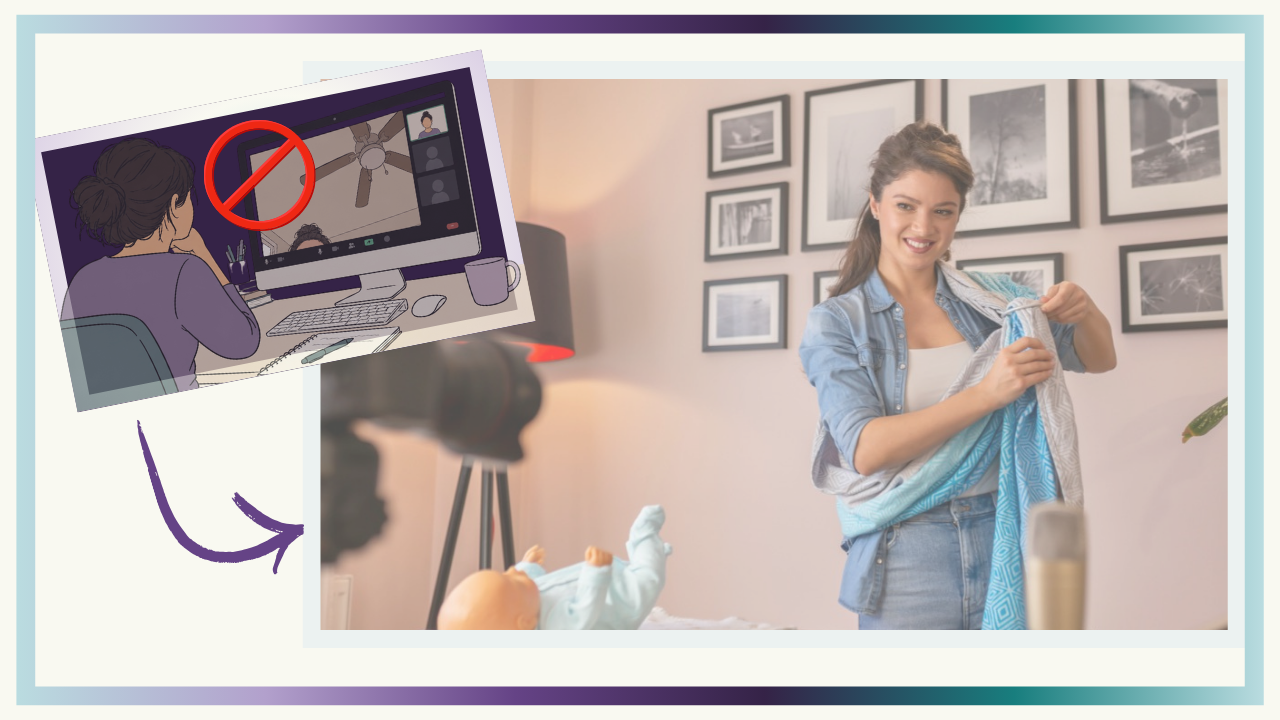
If you teach babywearing virtually, you've probably spent some time looking at a ceiling fan.
Picture this: The parent was pacing and has just settled their baby into the carrier. They turn toward the laptop so you can take a look, and oops: it’s a lovely view of the ceiling. Or their chin. Or the top of the baby's head, with everything you actually need to see just outside the frame.
It's a bit funny, until you realize the baby is ready to be done and you still haven't seen the carry. And the client is asking you questions.
I started teaching virtually years before COVID, and I'm still learning new things. Sometimes it's a better way to explain an adjustment, or asking for a camera angle that shows more. Sometimes it’s about needing to slow down because their internet is slow. Sometimes it's a reminder that something obvious to me might be completely new to the person on the other end.
Families can get really solid support through a screen, but it’s a different set of skills from us. We have to know when to slow down, speed up, or wait. Be clear about what we can and can't see, ask for things clearly, and stop when we don't have enough information. We also have to give parents time to notice what they're feeling and doing. And time for them to cope with their baby. Oh, and then there's the time they need to interact with others in their space, whether that's an older kid, a partner, doula, or grandparent. Plus, all the other things you’d expect to come up in a consultation.
So let's talk about how we teach when we can’t be there in person to guide the session.
• • •
Set up before the baby goes in
It's tempting to jump right into the babywearing. The family made time for this appointment, you have your carriers and doll ready, and everyone wants to get going.
A few minutes - up front - to set the stage makes the whole session easier.
What can you see? Ask the parent to stand where they plan to practice. Can you see their head, torso, and enough of their body to follow their hands? Can they see your demonstration without leaning in toward the screen? Can they pace a bit without going off-screen? Do they have two screens but only one camera? Where will they be looking when they look at you?
Do all this while their hands are still free. Once they're holding a baby and a carrier, moving the laptop or a lamp becomes a much bigger project. And a huge time-suck.
Here's what I usually check:
A steady spot for the camera. A phone or laptop propped securely at about chest height is a good starting point, and we can adjust the distance from there. A stack of books is often all it takes.
Light on the parent. A bright window behind them makes everything hard to see. Having them turn toward the light - or move the light - usually fixes it. Sometimes a new lamp is needed, or a new location.
A side view. Ask if they can turn sideways and stay in frame. A second device is nice if they already have one, but nobody should feel they need to buy something for this.
A mirror, if they have one. It lets them see the position you're describing for themselves, but but but it’s not worth it if they have to leave the screen area to see the mirror.
Sound. Confirm you can hear them clearly without straining or quality issues. If their audio is breaking up, pause and troubleshoot to improve the situation. Also, confirm you are clear and easy to understand.
We’re still not ready to jump into putting the carrier and baby on!
I like to see the carrier before it goes on. Have them hold it up or lay it out in front of the camera, and look over the carrier: straps, buckles, rings, fabric, webbing, etc and get clear on what, if any, adjustments are possible. Do this together with the manufacturer's instructions nearby. You might catch a twist or find an adjustment that might be needed, and it's best to do this before we start putting it on.
If they don’t have the instruction manual, you should be able to quickly pull it up from the manufacturer’s website and then share your screen for a moment if needed. Also share the link in the chat so they can access it. (Save it for your follow-up, too!)
Before you even connect:
A short prep text/email (or two) before the appointment helps, too. Keep it simple. Families should know what to gather, where to set up, and how to do it without feeling like they need to rearrange their living room.
And check your own setup. If the parent can see your face beautifully but not your hands or the carrier, your demonstration is going to be hard to follow. Don’t forget your background, too. You want it to be neat and professional. It doesn’t need to be void of personality or even a whole room, but you want it to feel welcoming.
• • •
You can't feel the carry, so they have to
A camera shows you a lot, but not everything. You can see the outline of the carrier without knowing how the fabric feels against the baby or caregiver, or see the waistband without knowing where the parent feels pressure. Even with a great angle, you're only getting part of the picture. (This is true for all setting, btw, but outsized in the virtual setting.)
That makes the parent’s nuanced observations a bigger part of the session. Specificity is critical here. Ask questions they can answer from their own experience, rather than asking them to make an educator's judgment call.
"Does that feel comfortable?" is not where to start. Be more specific. “Where do they feel the weight?” “What’s happening at their shoulder when you move your arm?” “When you bend forward slightly, what shifts?”
You might have them keep one hand supporting the baby, place the other on a part of the carrier, and tell you what they notice.
Give them time to answer. It can take a moment to notice what they’re feeling and to find the words. Sometimes they’re noticing something they hadn't been paying attention to until you asked.
The ABCs are a good way to organize this part of the conversation:
Airway (listen). Ask the parent to listen to their baby. (Without looking first.) Can they hear that the breathing is quiet and easy, without snoring, grunting, or whistling? You probably won’t be able to hear this well over a microphone (it’s hard in person, for that matter), so their ears are doing the work here. Now ask them to look and check that the nose and mouth are clear, the face is visible, and the chin is not pushed to their chest.
Breathing (feel). Have them start with what they feel. (No looking yet.) Can they feel their baby's lungs expand into their chest? Then, have them rest a hand on the baby's back or chest and feel the rise and fall. You can't feel it from where you are, so ask them to describe it. Now ask them to look at the baby and feel and hear the breath leave the nose or mouth. (Harder to feel when the caregiver wears thick layers.)
Circulation (look). Now that they are looking at the baby, have them check the baby's color and look at the legs and arms for pressure from the carrier or baby’s positioning. Lighting and cameras change how color looks, so your video feed isn’t a reliable read for a color or circulation concern.
The goal is for the parent to understand what they're checking and keep checking as the baby moves, settles, or shifts position.
If anything about the baby's breathing or responsiveness worries you, stop the fitting and have the parent take the baby out. Urgent concerns need medical help - this isn’t a push-through moment.
Back carries ask even more of your setup and your judgment. You need a way to see the carry, and the parent needs a way to monitor the baby. Consider their commitment, experience, the baby's developmental readiness, and the carrier's instructions before you start. And still start with something other than the baby. Ask them to have a large 10-15lb bag of rice or something similar on hand for practice.
If you can't get the view or information you need, pause. You can switch to a different carry, set up an in-person session for more support, or help the family find an educator who can see them in person.
• • •
"That buckle" could be any buckle
In person, a little gesture does a lot of work. You point at a buckle, and the person knows exactly which one you mean.
Through a screen, "that buckle" could leave them looking at the wrong one (or three). So be specific, and use things they can easily identify: the strap closest to the window, the hand under the baby's bottom, the buckle at their waist. Use their name to call their attention when they are moving ahead without listening.
Left and right get confusing when the video is mirrored (or isn’t). If you need to use them, pause and confirm which hand is which first. Better: use another reference point, and practice doing everything with both hands, not just your dominant one, so you can switch and make it easier for them to mirror you.
Your demo doll is really useful here. Show the movement with your hands in view, then let the parent try it.
Give one instruction at a time. Wait to see them looking at you, then move on. This feels shockingly slow when you're the one teaching. But you already know what comes next, and it's easy to start explaining step two while they're still working on step one.
So wait, and watch what they do. Let them finish and, at times, ask what they noticed before you move on. That pause can tell you a lot - if you let it. You might find out they understood your words differently than you meant, or that a movement is hard for them, and then you can adjust how you explain it.
If they lose their place, want to give up, or just take the carrier off, go back to the last step that made sense. Usually one small clarification gets them going again without starting over. If baby is crying, wait a moment before you speak, and then say the person’s name before you say anything else.
Tell them what's working, too, and be specific about it. "You found the strap I meant." "That brought your baby closer. Did you feel a difference? How does it feel now?" They're learning which actions make a difference, and your feedback helps them remember those actions after the appointment.
• • •
When the screen isn't enough
A virtual session runs on the information you and the parent can gather and work on together. Sometimes that's all you need. Sometimes, though, you reach a point where they need different support. It’s worth knowing that there will be times when the virtual session isn't enough.
A baby with low tone, a medical condition, or a recent NICU stay may need an individualized plan that involves their healthcare team. A parent dealing with pain, anxiety, depression, or limited mobility may need care from a clinician alongside babywearing support.
And sometimes you still just can't see, hear, or converse clearly enough. The Internet and Wi-Fi are their own demons.
It's okay to say, "I need a better view before I can help with this next adjustment," or "I'd like you to have someone with you in person for this part." Tell them what you need and why, so they understand what happens next. Better yet, plant seeds on your website, booking calendar, and in your confirmation and reminder texts/emails, and suggest having an alternate caregiver around to help, or hold the baby at times.
Have a few referrals ready. Another babywearing educator may be able to help in person, and a physical therapist or other healthcare professional may be better suited for something outside your scope. With the family's permission, help make the connection. Give them a name, number, and website, and explain what that person can help with.
You can also plan support in stages. A first video appointment can get a family started, a follow-up gives them a chance to ask about what came up when they practiced on their own, and an in-person visit can add the observation they need. How many of those steps a family needs depends on them and their unique situation.
• • •
Practice on another educator first
Teaching virtually can feel awkward at first, even if you're very comfortable teaching in person.
You might realize an instruction you've used for years depends on a gesture the camera can see, but doesn’t translate well. Or you finish a demonstration and notice your hands were out of frame the whole time. Much better to find that out in practice than in an appointment.
Ask another educator to hop on a video call. Teach a carry with your demo doll and have them follow along. Then ask where they lost you, what they could see, which words helped, and when they needed you to slow down.
Then switch. Being the learner teaches you a lot about your own teaching.
This is one reason I love Foundations' live online format. Students learn through a screen, and the teaching practice at the end of each session pairs them up so they can hear how it lands and try again. By the time they're working with families virtually, they've already been on both sides of the camera for a few months.
• • •
I've been teaching this way for a long time, and I'm still picking up new tricks, like clearer explanations for adjustments or even better laptop placement. Give yourself the same time to learn, and those ceiling fan views will get rarer.